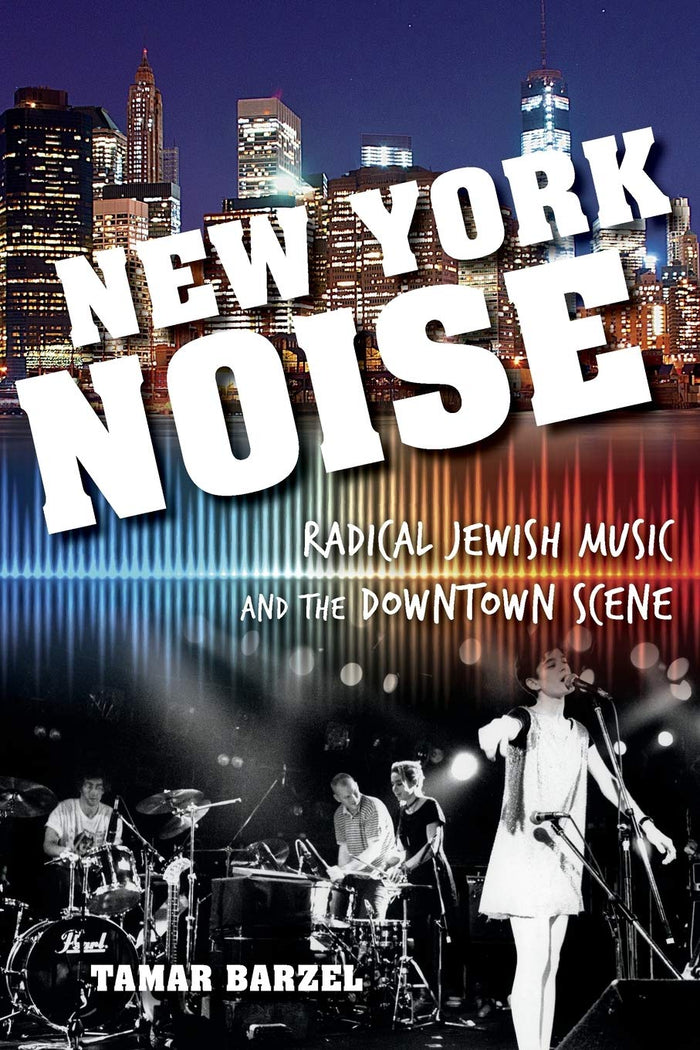
New York Noise: Radical Jewish Music and the Downtown Scene by Tamar Barzel
New York Noise: Radical Jewish Music and the Downtown Scene by Tamar Barzel
Excellent 4.9
19,544 Reviews
Trustpilot


465 sold in the past 24 hours
401 people are viewing this item
Only 1% left in stock
Regular price
$19.32
Regular price
$19.32
Sale price
$28.00
Unit price
per
Couldn't load pickup availability

New York Noise: Radical Jewish Music and the Downtown Scene by Tamar Barzel
Regular price
$19.32
Regular price
$19.32
Sale price
$28.00
Unit price
per
🔒 Order with Confidence
🔒 Order with Confidence
✅30-Day Money Back Guarantee — no risk trying it.
🚚Free shipping available. Orders processed within 24–48 hours.
🔐Secure & encrypted checkout with trusted payment providers.
Coined in 1992 by composer/saxophonist John Zorn, "Radical Jewish Culture," or RJC, became the banner under which many artists in Zorn's circle performed, produced, and circulated their music. New York's downtown music scene, part of the once-grungy Lower East Side, has long been the site of cultural innovation. It is within this environment that Zorn and his circle sought to combine, as a form of social and cultural critique, the unconventional, uncategorizable nature of downtown music with sounds that were recognizably Jewish. Out of this movement arose bands, like Hasidic New Wave and Hanukkah Bush, whose eclectic styles encompassed neo-klezmer, hardcore and acid rock, neo-Yiddish cabaret, free verse, free jazz, and electronica. Though relatively fleeting in rock history, the "RJC moment" produced a six-year burst of conversations, writing, and music―including festivals, international concerts, and nearly two hundred new recordings. During a decade of research, Tamar Barzel became a frequent visitor at clubs, post-club hangouts, musicians' dining rooms, coffee shops, and archives. Her book describes the way RJC forged a new vision of Jewish identity in the contemporary world, one that sought to restore the bond between past and present, to interrogate the limits of racial and gender categories, and to display the tensions between secularism and observance, traditional values and contemporary concerns.
View full details